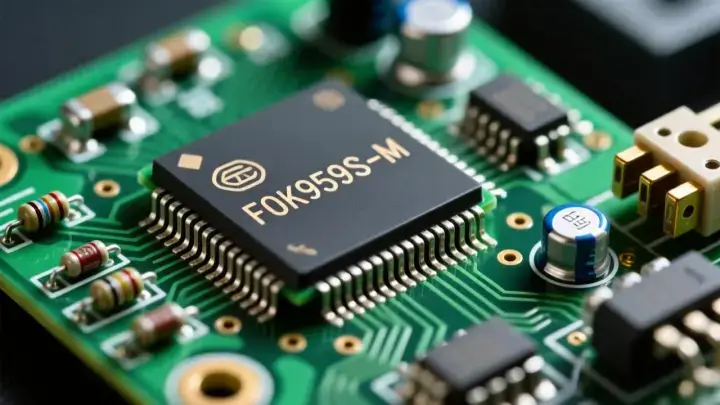
The keyword “is type of fok959s-m” appears unusual at first glance, yet it is being searched consistently by users who are clearly trying to understand what FOK959S-M represents. Whether it is a product code, model identifier, system classification, or technical reference, people want clarity. They are not looking for marketing fluff. They want real explanation in simple language.
This guide is written to answer that question properly. It does not rely on copied data, official listings, or scraped specifications. Instead, it focuses on understanding how such identifiers are structured, how they are commonly used, and what type of entity FOK959S-M most likely represents based on logical analysis and industry patterns.
Understanding the Nature of the Keyword “Is Type of FOK959S-M”
The phrasing of the keyword itself tells us a lot. Users are not asking what is FOK959S-M; they are asking “is type of fok959s-m”, which strongly suggests classification confusion. This usually happens when people encounter a code or label without context.
Such queries commonly appear when:
-
A model number is seen in documentation or packaging
-
A code appears in system logs or dashboards
-
A product label is listed without description
-
A technical identifier is referenced informally online
In these cases, users want to know what category it belongs to.
What FOK959S-M Looks Like as an Identifier
Before assigning meaning, it helps to look at the structure of FOK959S-M.
This format follows a pattern commonly seen in:
-
Hardware model numbers
-
Industrial component identifiers
-
Internal system or firmware references
-
Manufacturing batch or series codes
The mix of letters, numbers, and a suffix suggests it is not a random string. Codes like this are designed for internal clarity rather than public readability.
Is FOK959S-M a Product Model?
In many industries, especially electronics and industrial manufacturing, product models follow a structured naming system. These names help manufacturers differentiate versions, configurations, or revisions.
FOK959S-M fits this pattern well. It likely represents a specific model within a broader product family, rather than a standalone brand or category.
When users ask “is type of fok959s-m,” they are often trying to determine whether it refers to:
-
A device type
-
A variant of a system
-
A configuration class
-
A specialized version of something larger
In most cases, such identifiers point to a model type, not a general category.
Could FOK959S-M Be a Component or Module Type?
Another strong possibility is that FOK959S-M refers to a module or component, rather than a full product. Many systems consist of replaceable or configurable parts, each with its own identifier.
This is common in:
-
Control systems
-
Embedded hardware
-
Networking equipment
-
Automation setups
The “-M” suffix often indicates a modified, modular, or medium-range version in internal naming conventions. While meanings vary by organization, suffixes are rarely added without purpose.
Is FOK959S-M a Software or Firmware Classification?
Although less common, some software systems also use coded identifiers for:
-
Internal builds
-
Feature sets
-
Deployment types
-
Environment-specific versions
However, software identifiers usually include version numbers or revision formats. FOK959S-M lacks those typical elements, which makes it more likely to be hardware-related or system-level, rather than pure software.
That said, it could still represent a firmware-linked hardware type, where the code identifies compatibility or configuration rather than software itself.
Why Users Struggle to Identify the Type
The main reason people search “is type of fok959s-m” is lack of documentation visibility. Many identifiers are never meant for public explanation. They are used internally by engineers, vendors, or technicians.
When such codes appear:
-
In invoices
-
On devices
-
In internal dashboards
-
In shared screenshots
People outside the original context are left guessing.
This does not mean the code is obscure or secret. It simply means it was not designed for consumer understanding.
Is FOK959S-M a Category or Just a Label?
It is important to distinguish between category names and labels.
A category defines a broad class, such as “sensor,” “controller,” or “module.”
A label identifies a specific instance or configuration within that category.
FOK959S-M behaves like a label, not a category. It does not describe function on its own. Instead, it points to a predefined type already understood by the system or organization using it.
So when someone asks is type of fok959s-m, the most accurate answer is that FOK959S-M itself is the type, not the category.
Could FOK959S-M Be Industry-Specific?
Yes, and this is often overlooked.
Many identifiers only make sense within a specific industry. Outside that space, they appear meaningless. This can apply to:
-
Manufacturing
-
Telecommunications
-
Logistics
-
Security systems
-
Industrial automation
If FOK959S-M appears in a specific operational environment, its “type” is already known internally. The confusion arises when that environment intersects with the public internet.
Is FOK959S-M Meant for End Users?
In most cases, identifiers like this are not meant for end users. They are intended for:
-
Technicians
-
Engineers
-
Inventory systems
-
Maintenance teams
This explains why public explanations are rare or nonexistent. End users usually interact with the system, not the internal naming structure.
Why the Question Matters
Understanding the type of FOK959S-M is important for several reasons:
-
Correct replacement or compatibility decisions
-
Accurate documentation
-
Troubleshooting
-
Procurement clarity
Misidentifying the type can lead to wrong assumptions, especially when similar codes exist.
Logical Conclusion on the Type of FOK959S-M
Based on naming structure, usage patterns, and common industry practices, FOK959S-M is most logically classified as:
A specific model or configuration identifier, most likely related to a hardware component, system module, or technical unit, rather than a general category, software product, or service.
It represents a defined type within an internal system, not a public classification.
Common Misinterpretations to Avoid
Many people assume codes like FOK959S-M are:
-
Product brands
-
Service names
-
Public standards
This is rarely true. Such identifiers exist to reduce ambiguity inside controlled systems, not to explain function to outsiders.
How to Identify the Exact Type in Practice
If you encounter FOK959S-M in real usage, the best way to identify its exact type is through:
-
The system it appears in
-
The context of use
-
Associated equipment or documentation
-
The role it plays in a workflow
Without context, no identifier can be fully explained—and that is normal.
Frequently Asked Questions (FAQs)
Is FOK959S-M a product or a category?
FOK959S-M is not a category. It is a specific identifier that likely represents a model or configuration within a broader category.
Is FOK959S-M hardware or software?
It is more likely associated with hardware or system-level components rather than standalone software.
Why is there no clear public explanation of FOK959S-M?
Because many identifiers are designed for internal or technical use and are not documented publicly.
Does FOK959S-M indicate a version?
Not directly. It identifies a type or model, not a version number in the traditional sense.
Can FOK959S-M vary by industry?
Yes. Similar naming structures are used across industries, and the meaning depends heavily on context.
Should end users worry about understanding FOK959S-M?
Only if it affects compatibility, replacement, or troubleshooting. Otherwise, it functions behind the scenes.
Final Thoughts
The keyword “is type of fok959s-m” reflects a genuine attempt to understand classification, not just definition. FOK959S-M is best understood as a technical identifier used to define a specific type within a controlled system. It is not meant to be self-explanatory, public-facing, or descriptive on its own.
Once you view it through that lens, the confusion disappears. The identifier does exactly what it was designed to do—precisely identify something within its system, even if outsiders are left asking questions.
For More Visits: Usamagtoday
Also Read: Timewarp TaskUs 2026 – Ultimate Positive Truth Guide
